
Does fluoride whiten teeth? The truth about a common misconception

- Fluoride strengthens and protects enamel but does not change the colour of your teeth.
- Real whitening relies on bleaching agents like hydrogen peroxide or carbamide peroxide that lift stains.
- The best approach pairs fluoride for healthy teeth with professional whitening to brighten them.
No, fluoride does not whiten teeth. It strengthens and protects enamel, which can make your teeth look healthier and glossier, but actually changing their colour requires bleaching agents like hydrogen peroxide or carbamide peroxide. Fluoride and whitening do two different jobs, and it’s easy to confuse them.
What fluoride actually does

Fluoride is a mineral that strengthens tooth enamel, the hard outer shell that protects your teeth. Think of enamel as armour: fluoride reinforces that armour and makes it more resistant to acid attacks.
When you eat or drink, bacteria in your mouth produce acids that strip minerals from your enamel, a process called demineralization. Fluoride helps reverse this by drawing minerals like calcium and phosphate back to the tooth surface, known as remineralization. It can even reverse early decay before a cavity has the chance to form. Research has found that fluoride can reduce cavities by up to 25 percent in children and adults, which is a meaningful oral-health benefit that has nothing to do with tooth colour.
Fluoride can also help with tooth sensitivity by strengthening weakened enamel. If cold drinks or sweet foods cause discomfort, fluoride treatments that reinforce those protective layers may bring some relief.
Why people think fluoride whitens teeth
After a professional cleaning that includes a fluoride treatment, teeth often look and feel noticeably better: smoother, cleaner, and maybe a little brighter. That brightness, though, comes from the cleaning itself.
During the appointment, the hygienist removes surface stains, plaque, and tartar, and the fluoride goes on afterward. Because the fluoride comes last, it’s easy to give it the credit for a brighter smile. There’s also a subtle visual effect at play: healthy enamel reflects light differently than damaged enamel, so when fluoride strengthens enamel, teeth can appear glossier and more radiant. That reflects healthier teeth, not whiter ones. On top of that, many toothpastes combine fluoride with whitening agents, which leads people to credit fluoride for effects that actually come from hydrogen peroxide or mild abrasives.
What actually whitens teeth
Real whitening happens when bleaching agents break down the molecules responsible for discoloration within enamel and dentin. Hydrogen peroxide and carbamide peroxide are the active ingredients that oxidize and lift stains out of the tooth structure.
There are two main types of stains:
-
Surface (extrinsic) stains come from coffee, tea, red wine, and tobacco. They sit on the outer enamel and respond well to professional cleaning or whitening toothpaste.
-
Intrinsic (deeper) stains form within the tooth due to aging, certain medications, or trauma. These need a bleaching agent that can penetrate below the enamel surface to lift the discoloration.
Professional whitening uses concentrated bleaching agents that work faster and more effectively than most store-bought products. Creekside Dental offers in-office whitening for quicker results as well as take-home kits for gradual whitening on your own schedule. For severely stained or whitening-resistant teeth, dental veneers can provide a long-term cosmetic solution.
Can fluoride make your teeth look better?
While fluoride won’t change tooth colour, it does contribute to a healthier, more attractive smile by strengthening enamel and preventing decay. Strong enamel has a natural gloss that damaged enamel lacks, which helps your teeth keep a bright, healthy look.
Fluoride also helps prevent the white or brown spots that come with early cavities. As decay progresses, those spots darken into visible flaws. By stopping decay before it starts, fluoride helps keep teeth smooth and even in colour.
The best approach for a whiter, healthier smile
A good way to think about it: fluoride protects, and whitening perfects. The best results come from combining the two:
-
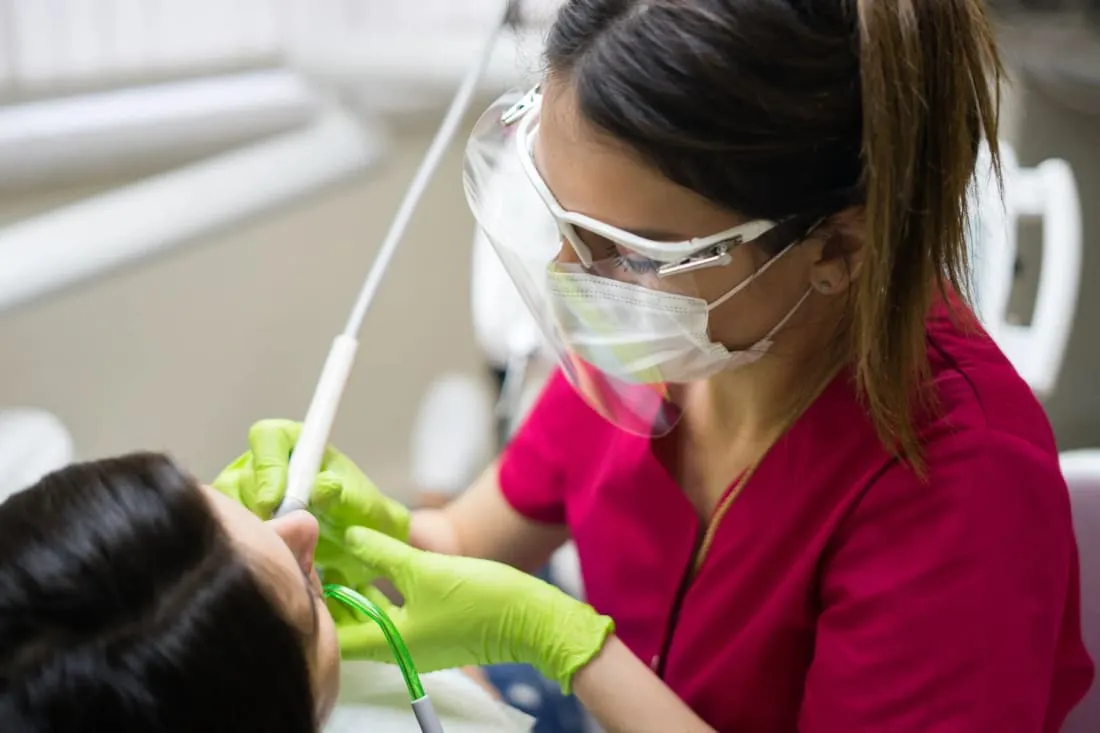
Start with regular exams and cleanings every six months. Professional cleaning removes the stains that dull your smile, while fluoride strengthens enamel against future decay.
-
Address existing dental issues before whitening. Cavities need filling, gum disease needs treatment, and worn enamel may need restoration. Whitening teeth with untreated decay can cause sensitivity and uneven colour.
-
Then brighten healthy teeth. Once your teeth are healthy, professional whitening can safely lighten your smile by several shades. Dr. Hu can recommend the best method based on your stain type and sensitivity level.
-
Maintain your results. Fluoride toothpaste, regular cleanings, and the occasional touch-up keep teeth both strong and bright, a bit like routine maintenance for a car.
In short, fluoride keeps your teeth healthy and whitening makes them look their best. The two work well together to support a smile that’s both healthy and bright.
Frequently asked
Does fluoride whiten teeth?
No. Fluoride strengthens enamel and helps prevent decay, but it doesn't change the colour of your teeth. The brighter look people notice after a fluoride treatment usually comes from the cleaning that happens first, when stains, plaque, and tartar are removed.
What actually whitens teeth?
Whitening relies on bleaching agents, most commonly hydrogen peroxide and carbamide peroxide, that break down the molecules causing discoloration in enamel and dentin. Surface stains from coffee, tea, or wine respond to cleaning and whitening toothpaste, while deeper stains need a bleaching agent to penetrate below the surface.
Can fluoride make my teeth look better even if it doesn't whiten them?
Yes. By strengthening enamel and preventing decay, fluoride helps your teeth keep their natural gloss and stops white or brown spots from early cavities. Healthy, strong enamel reflects light better, so teeth tend to look brighter and more even, just not literally whiter.
Should I treat dental problems before whitening?
Yes. Whitening works best on healthy teeth. Cavities should be filled, gum disease treated, and worn enamel restored first, because whitening teeth with untreated decay can cause sensitivity and uneven colour.

Dr. Brian Hu, BSc · DMD


Have a question about your smile?
Book a visit and we'll give you clear, honest answers — and written pricing before anything begins.