
Dental implants in Langley.
Dental implants are a long-term solution for replacing missing teeth and restoring both function and appearance. At Creekside Dental, we approach implant care with a focus on stability, comfort, and natural-looking results — helping you regain confidence in your smile while supporting long-term oral health.
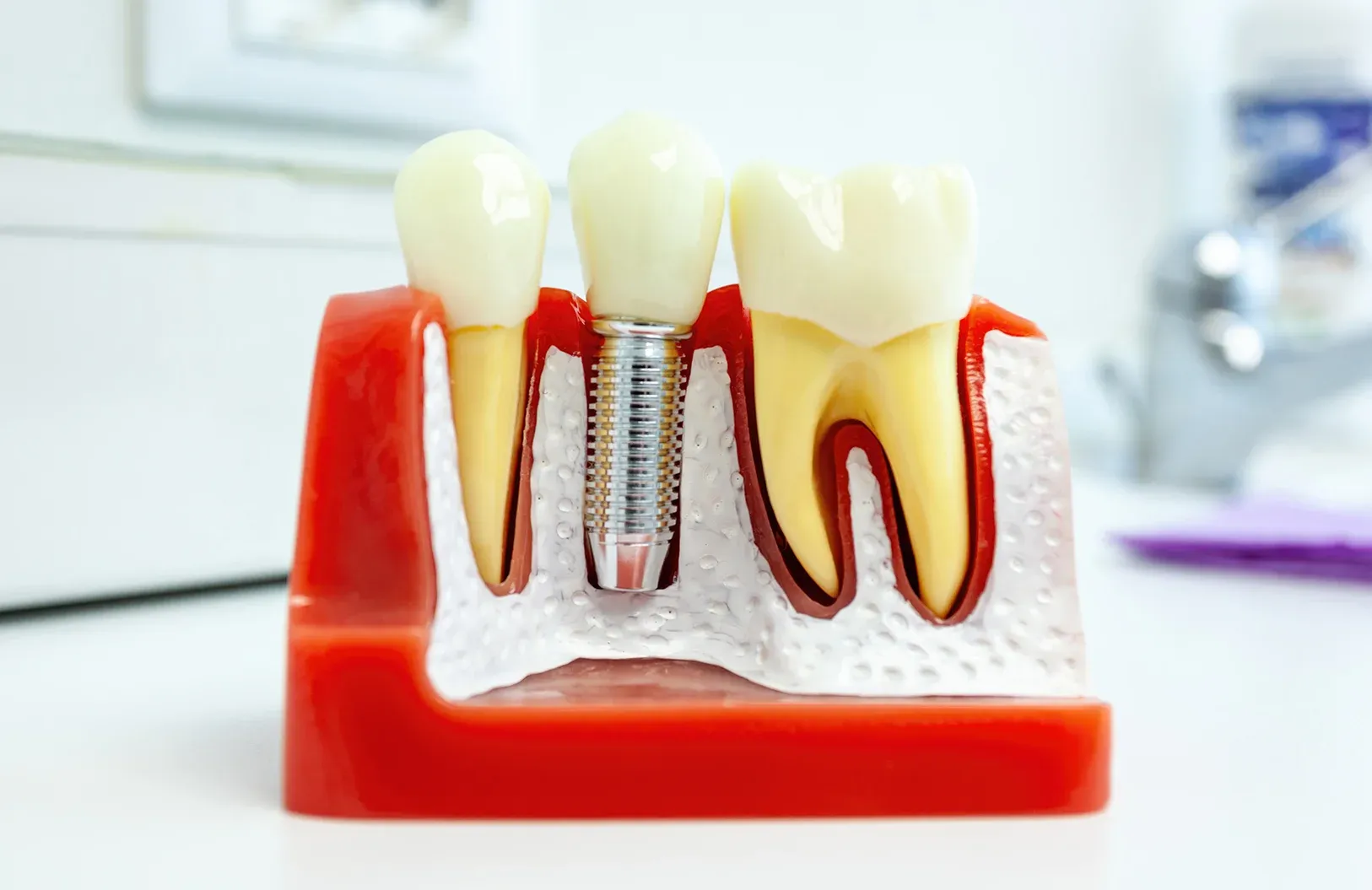
What is a dental implant?
A dental implant is a small titanium post placed into the jawbone to replace the root of a missing tooth. Once it heals and integrates with the bone, it becomes a secure foundation for a crown, bridge, or denture — restoring strength and stability while looking and functioning like a natural tooth.
Stable, reliable, built to last.
Unlike removable options, implants are anchored into the jawbone — reducing movement when eating or speaking and supporting long-term oral health. With proper care, they can provide decades of dependable function.
Natural appearance
Designed to blend seamlessly with your smile.
Long-term durability
Built to withstand everyday chewing forces.
Improved function
Eat and speak comfortably again.
Bone support
Helps maintain jawbone structure over time.
Confidence
Restores stability and peace of mind.
Implants vs dentures vs bridges.
Dentures
Removable, and may shift or require adhesives during everyday use.
Bridges
Rely on neighbouring teeth for support, which can place additional stress on healthy tooth structure.
Implants
Secured directly into the jawbone — stable, without affecting adjacent teeth, and helps preserve bone over time.
Who may be a candidate.
Implants suit many patients, but candidacy depends on overall health, gum condition, and jawbone support. A thorough assessment lets Dr. Hu determine whether implants are appropriate, or if preparatory treatment is needed first.
Health requirements
Healthy gums and adequate jawbone are important for successful implant placement. Conditions such as gum disease or untreated decay must be addressed before treatment. Certain medical conditions may also affect healing, which is why your medical history is carefully reviewed as part of the planning process.
When is bone grafting needed?
Some patients experience jawbone loss due to missing teeth, injury, or gum disease. In these cases, bone grafting may be recommended to rebuild a stable foundation for an implant. While this adds an extra step, it significantly improves the long-term stability and success of treatment.
The implant process, step by step.
Each stage is completed with precision and clear communication, so you always know what comes next.
Initial consultation
A comprehensive exam, imaging, and treatment planning.
Implant placement
The implant is placed using local anaesthesia, with oral sedation available if you feel anxious.
Healing period
Time is allowed for the implant to integrate with the jawbone.
Restoration
A custom crown or restoration is attached once healing is complete.
During placement
Implant placement is typically performed under local anaesthesia to keep you comfortable. The procedure is precise and usually completed within a single appointment per implant. Mild swelling or soreness afterward is common and can be managed with standard aftercare measures.
Healing & recovery
Most patients return to normal activities within a few days following placement. During healing, it's important to follow aftercare instructions, maintain good oral hygiene, and attend follow-up visits to ensure proper integration and recovery.
Long-term care & maintenance.
Caring for your implants
Care for implants just like natural teeth — brush twice daily, floss regularly, and attend professional cleanings to keep gums and surrounding tissues healthy.
Signs to watch for
Contact us if you notice ongoing pain, swelling, bleeding, or movement around an implant. Early evaluation helps prevent complications and protects long-term results.
Your implant questions, answered.
How much does a dental implant cost?
Dental implants vary in cost because dentists have different approaches and no two cases are identical. A simple case will require only an implant and crown, while a more complex case could require both bone and gum grafting. What's important for the patient isn't just getting a dollar amount over the phone, but having the surgical site examined and understanding the scope of the surgery required.
Is the dental implant procedure painful?
Most pain related to surgical implant placement is usually less than that from having a tooth extracted. More discomfort and swelling often comes not from the implant placement itself, but from grafting hard and soft tissue if that is required. It can all be managed with anti-inflammatory medication and pain relief.
How long does a dental implant last?
Implants have the potential to last a very long time — but so does a person's natural dentition, and the same factors that cause tooth loss can affect implants. Excessive overloading or trauma can damage the implant fixture, and neglecting oral hygiene can let plaque accumulate and cause bone loss around an implant, the same way it can around natural teeth.
How can I relieve pain from a dental implant?
A dental implant shouldn't ache or feel sore once the crown has been placed. If there's discomfort from an implant after it has integrated, it's important to see a dentist to check whether there's any infection around the implant.
Who is a candidate for dental implants?
Most adults with good oral health and sufficient jawbone density are candidates for dental implants. Your dentist will evaluate your specific situation to determine if implants are the right choice for you.
What types of dental implants are available?
There are several types of dental implants, including endosteal implants (placed in the jawbone) and subperiosteal implants (placed under the gum but above the jawbone). Your dentist will recommend the best option based on your needs.
What foods should I avoid after dental implant surgery?
Avoid anything that can irritate the healing site — anything sour, spicy, hot, or crunchy. The best way to think about it is to imagine there's a small ulcer there, and avoid the foods that would aggravate it.
Do I need to avoid dairy after a dental implant?
There's no definitive research limiting dairy during the implant healing process. What's good to avoid are hard or sticky foods, to prevent excessive movement of the implant before it has integrated — and anything that raises inflammation or infection risk, such as smoking, alcohol, or spicy foods.
What should I do if my dental implant feels loose?
If you notice that your dental implant feels loose, contact your dentist right away for an evaluation. Early intervention is crucial to address any issues and protect the health of the implant.

Dr. Brian Hu, BSc · DMD
Schedule a dental implant consultation.
We'll evaluate your oral health, discuss your goals, and guide you through your options. Book online, or contact us with any questions — we make it simple.