
The complete guide to dental implants

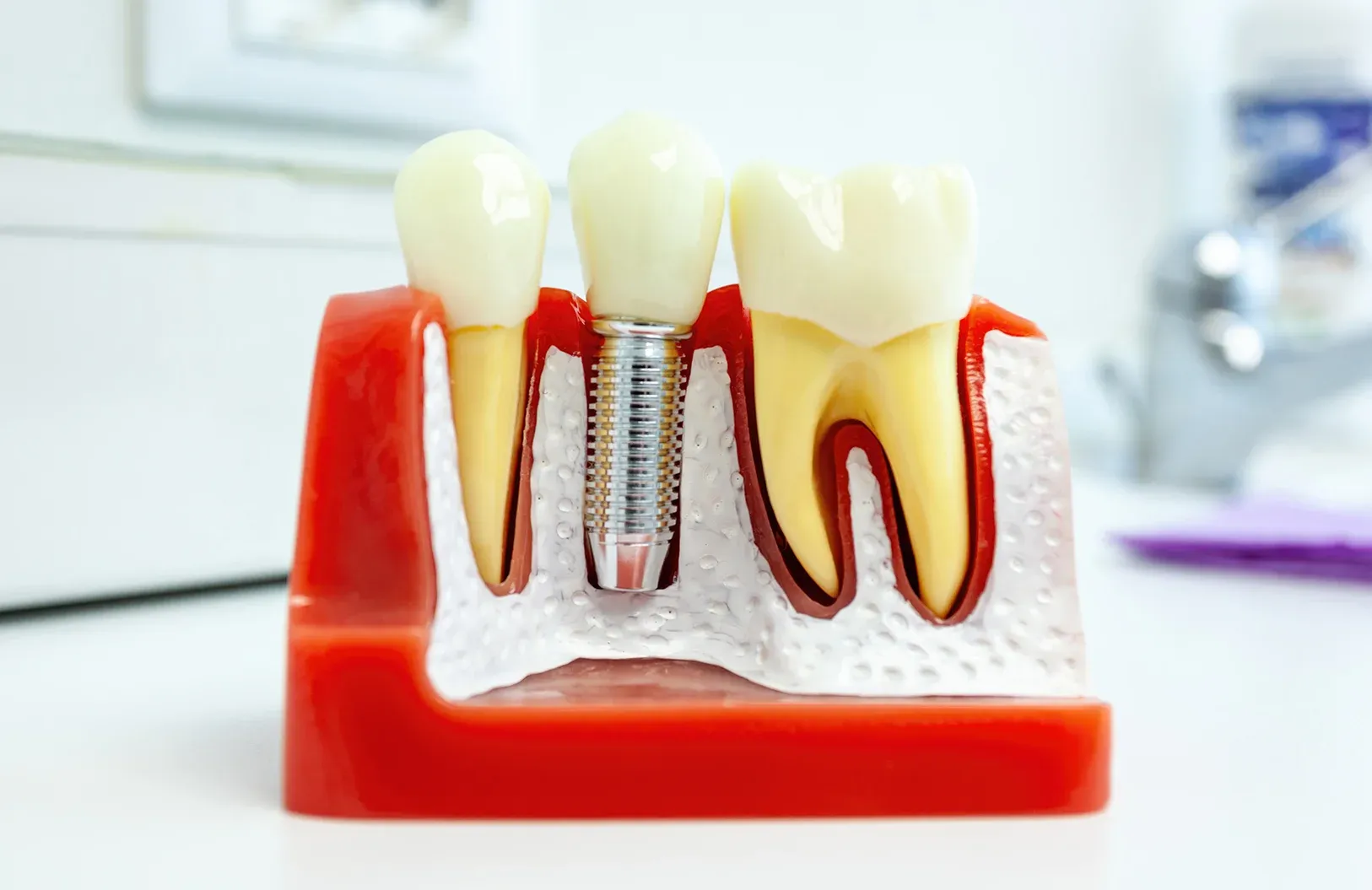
- A dental implant has three parts: a titanium post in the jaw, an abutment, and a custom crown that matches your natural teeth.
- The implant fuses with the jawbone over 3–6 months (osseointegration), creating a stable foundation that doesn't rely on neighbouring teeth.
- With good oral hygiene and regular check-ups, implants can last a very long time, though the crown may need replacing after 10–15 years.
Dental implants are titanium posts surgically placed into the jawbone to act as artificial tooth roots, topped by a connector and a custom crown that matches your natural teeth. Unlike dentures or bridges, implants fuse with the bone for a stable foundation that doesn’t rely on neighbouring teeth. With good care, they can last for a very long time.
If you’re considering dental implants, here’s a clear overview of what they are, who they suit, what the process involves, and how they compare with other ways of replacing missing teeth.
What are dental implants?
Dental implants are titanium posts placed into your jawbone to act as artificial tooth roots. They provide a strong foundation for fixed or removable replacement teeth made to match your natural teeth. Because implants fuse with the jawbone, they offer stability without relying on or altering the teeth beside them.
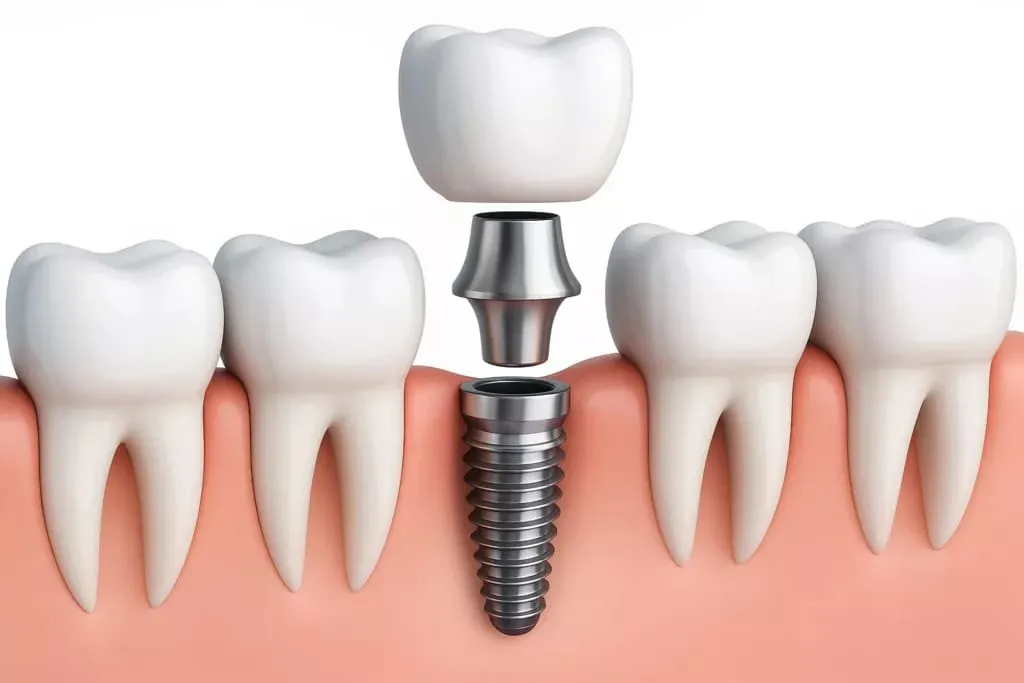
A complete implant has three parts:
-
The implant: a titanium post that replaces the tooth root
-
The abutment: a connector that supports the crown
-
The crown: the visible part that looks like a natural tooth
Who is a good candidate?
Most people in good general and oral health can benefit from dental implants. Ideal candidates have:
-
Healthy gums
-
Enough bone to support the implant
-
Good oral hygiene habits
-
No health conditions that interfere with bone healing
Even if you’ve been told you lack sufficient bone density, options like bone grafting can often prepare the area for a successful implant.
The dental implant process
Restoring a smile with implants typically involves several steps spread over a few months:
-
Initial consultation. We assess your oral health, take X-rays, and create a personalized treatment plan.
-
Preparatory procedures. This may include tooth extractions, bone grafting, or treating gum disease if needed.
-
Implant placement. The titanium post is surgically placed into the jawbone under local anesthesia for your comfort.
-
Healing period. Over 3–6 months, the implant fuses with the jawbone through a process called osseointegration.
-
Abutment placement. Once healing is complete, the connector is attached to the implant.
-
Crown placement. Finally, your custom-made crown is attached to the abutment, completing your new tooth.
For patients with dental anxiety, sedation options can make the experience more comfortable.
Recovery and aftercare
Most patients return to normal activities the day after implant surgery. You might have some swelling and discomfort, which can usually be managed with over-the-counter pain medication.
Caring for implants is much like caring for natural teeth:
-
Brush twice daily with a soft-bristled toothbrush
-
Floss daily, being gentle around the implant area
-
Attend regular dental check-ups
-
Avoid smoking, which can impair healing and reduce implant success
Benefits of dental implants
Implants offer several advantages over other tooth-replacement options:
-
Longevity: with proper care, implants can last a very long time
-
Natural appearance: they look and feel like your own teeth
-
Improved speech: unlike poorly fitting dentures, they won’t cause slurred speech
-
Comfort: they become part of you, avoiding the discomfort of removable dentures
-
Easier eating: they function like natural teeth, so you can eat the foods you enjoy
-
Bone preservation: they stimulate the bone, helping to prevent the bone loss that follows tooth loss
-
Protection of nearby teeth: unlike bridges, they don’t require altering adjacent teeth
How implants compare with bridges and dentures
Bridges and dentures are viable alternatives, but they have limitations. Bridges require modifying healthy adjacent teeth, and dentures can slip or feel uncomfortable. Implants cost more up front, but their durability and natural function often make them the most cost-effective long-term solution.
Dental implants in Langley
If you live in or near Langley, you have good access to the care an implant treatment involves, from the initial assessment and any preparatory work through to placement and follow-up. Having your dentist, records, and any specialist referrals in one place makes it easier to keep each stage on track and to ask questions as they come up.
Coverage and next steps
Many dental insurance plans now cover a portion of implant treatment, and payment options can make the process more manageable. Because coverage varies, it’s worth reviewing your benefits before you begin.
If you’re considering dental implants, a consultation is the best place to start. A comprehensive examination and personalized treatment plan will help you decide whether implants are the right choice for replacing your missing teeth — and what to expect at each step.
Frequently asked
Are dental implants painful?
Most patients report less discomfort than they expected. Local anesthesia keeps the procedure comfortable, and any soreness afterward is usually manageable with over-the-counter pain medication.
How long do dental implants last?
With good care and regular check-ups, the implant post itself can last a very long time. The crown on top may need replacement after about 10–15 years due to normal wear.
Am I a good candidate for dental implants?
Most people in good general and oral health qualify. Ideal candidates have healthy gums, enough bone to support the implant, good oral hygiene, and no conditions that interfere with bone healing. If bone is limited, bone grafting can often prepare the area.
Will my insurance cover dental implants?
Many plans now provide some coverage for implants. Coverage varies, so it's worth reviewing your benefits and asking about payment options before treatment begins.

Dr. Brian Hu, BSc · DMD

Have a question about your smile?
Book a visit and we'll give you clear, honest answers — and written pricing before anything begins.