
When a toothache becomes an emergency


- Severe, throbbing pain that doesn't respond to pain medication is a sign you need emergency dental care.
- Facial swelling, fever, difficulty swallowing, or pus point to a spreading infection — seek care right away.
- Brief sensitivity to hot or cold that responds to over-the-counter medication can usually wait for a regular appointment.
A toothache becomes an emergency when the pain is severe and constant, doesn’t respond to over-the-counter medication, or comes with facial swelling, fever, difficulty swallowing, or visible pus. These are signs of an infection that may be spreading, and they call for same-day care.
A dull ache after something sweet is one thing, but knowing when tooth pain crosses from annoying to dangerous can save your tooth — and sometimes protect your health. Here’s how to tell the difference and what to do.
The pain scale: when discomfort becomes dangerous
Not every toothache needs an after-hours call, but some do. Use these tiers as a guide.
Emergency tooth pain (needs immediate care)
-
Severe, throbbing pain that doesn’t respond to pain medication
-
Pain accompanied by facial swelling
-
Fever along with tooth pain
-
Pain intense enough to prevent sleeping, eating, or concentrating
-
Visible pus or discharge around the tooth
Urgent tooth pain (needs attention within 24–48 hours)
-
Persistent aching that lasts several hours
-
Pain that wakes you up at night
-
Sensitivity that lingers after the hot or cold stimulus is removed
-
Mild swelling around the affected tooth
Mild tooth pain (can wait for a regular appointment)
-
Brief sensitivity to hot or cold foods
-
Slight discomfort when chewing that comes and goes
-
Pain that responds well to over-the-counter pain medication
Red-flag symptoms that can’t wait
A few warning signs mean you should be seen right away, even if the pain itself seems manageable.
-
Facial swelling. Swelling in the cheek, jaw, or neck suggests an infection that is spreading beyond the tooth. Left untreated, it can reach important structures in the neck.
-
Fever and difficulty swallowing. Fever alongside tooth pain points to a significant infection. Trouble swallowing can mean the infection is moving toward the throat and needs prompt medical attention.
-
A metallic taste or pus. A bad taste — especially metallic — or visible pus indicates an active infection that needs urgent treatment.
If you have swelling that is spreading quickly, trouble breathing or swallowing, or a high fever, go to a hospital emergency department rather than waiting for a dental appointment.
Common causes of emergency toothaches
Understanding what’s behind the pain helps explain why prompt care matters.
-
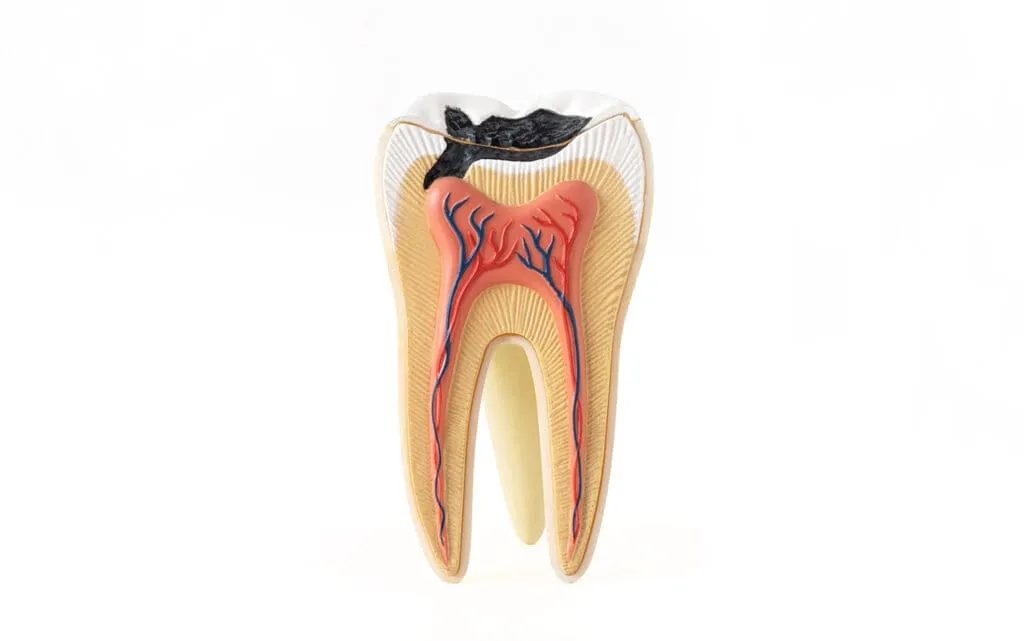
Deep decay. When an untreated cavity reaches the nerve (pulp), it can cause intense pain and often requires root canal treatment.
-
Dental abscesses. Pockets of infection that form around a tooth root can spread quickly and usually need drainage along with antibiotics.
-
Cracked or fractured teeth. A deep crack can expose the nerve and may require a crown or other restorative treatment.
-
Failed dental work. A lost filling exposes tooth structure, causing sensitivity and raising the risk of bacterial infection.
-
Impacted wisdom teeth. When there isn’t enough room, a wisdom tooth can cause pain, swelling, and infection in the surrounding gum.
What makes tooth pain worse
A few patterns suggest the problem is more serious and shouldn’t be left alone.
-
Pain that worsens at night. Tooth pain that intensifies when you lie down often reflects increased blood flow to an inflamed or infected area. This pattern usually means you need professional treatment.
-
Sensitivity that lingers. Brief sensitivity to hot or cold is normal, but pain that continues for more than about 30 seconds after the trigger is removed can point to nerve damage.
-
Pain that radiates. Tooth pain that spreads to your ear, jaw, or neck often signals infection or nerve damage that needs prompt care.
What you can do while you wait
If you’re waiting to be seen, a few steps can keep you more comfortable:
-
Rinse gently with warm salt water to help clean the area.
-
Take over-the-counter pain medication as directed on the label.
-
Apply a cold compress to the outside of your cheek to ease swelling.
-
Avoid very hot, very cold, or hard foods on the affected side.
These measures manage symptoms but don’t treat the cause, so book an appointment as soon as you can.

Severe, persistent tooth pain along with swelling, fever, or other concerning symptoms always needs prompt professional attention. Same-day emergency care can get you out of pain quickly and stop a small problem from becoming a serious one.
Frequently asked
When is a toothache a dental emergency?
Treat it as an emergency when the pain is severe and constant, doesn't respond to pain medication, or comes with facial swelling, fever, difficulty swallowing, or visible pus. These signs suggest an infection that is spreading and needs prompt care.
Can a toothache go away on its own?
Pain may fade temporarily, but that often means the nerve has died rather than the infection clearing. The underlying problem — decay, an abscess, or a cracked tooth — won't heal without treatment, and the pain usually returns worse than before.
What should I do while I wait to be seen?
Rinse with warm salt water, take over-the-counter pain medication as directed, and apply a cold compress to the outside of the cheek for swelling. Avoid very hot, cold, or hard foods on that side, and call for a same-day appointment if symptoms are severe.

Dr. Brian Hu, BSc · DMD


Have a question about your smile?
Book a visit and we'll give you clear, honest answers — and written pricing before anything begins.